
19 November 2026
Quick answer: Long-term research found about 96% of dental implants still in place after ten years (Howe et al., 2019). The implant in the bone often lasts longer than the crown or arch on it, which can wear or chip and may need repair or replacement over the years. Daily cleaning, maintenance visits, a night guard if you grind and not smoking all help an implant last.
Implants are often described as lasting forever. No dental work does, but implants have some of the strongest long-term records in dentistry. Here is what the research shows, which parts wear, and what keeps an implant healthy.
What does the research say about how long implants last?
A systematic review of studies with at least ten years of follow-up found about 96% of implants still in place at ten years (Howe et al., 2019). Survival means the implant is still in the bone. It does not mean nothing needed attention along the way.
For single implant crowns, a systematic review with a mean follow-up of five years found high survival, alongside technical issues such as screw loosening and chipped porcelain (Jung et al., 2012). For full arches on four implants, a systematic review reported high implant and prosthesis survival in the studies available, most with shorter follow-up (Patzelt et al., 2014).
Which parts of an implant wear out first?
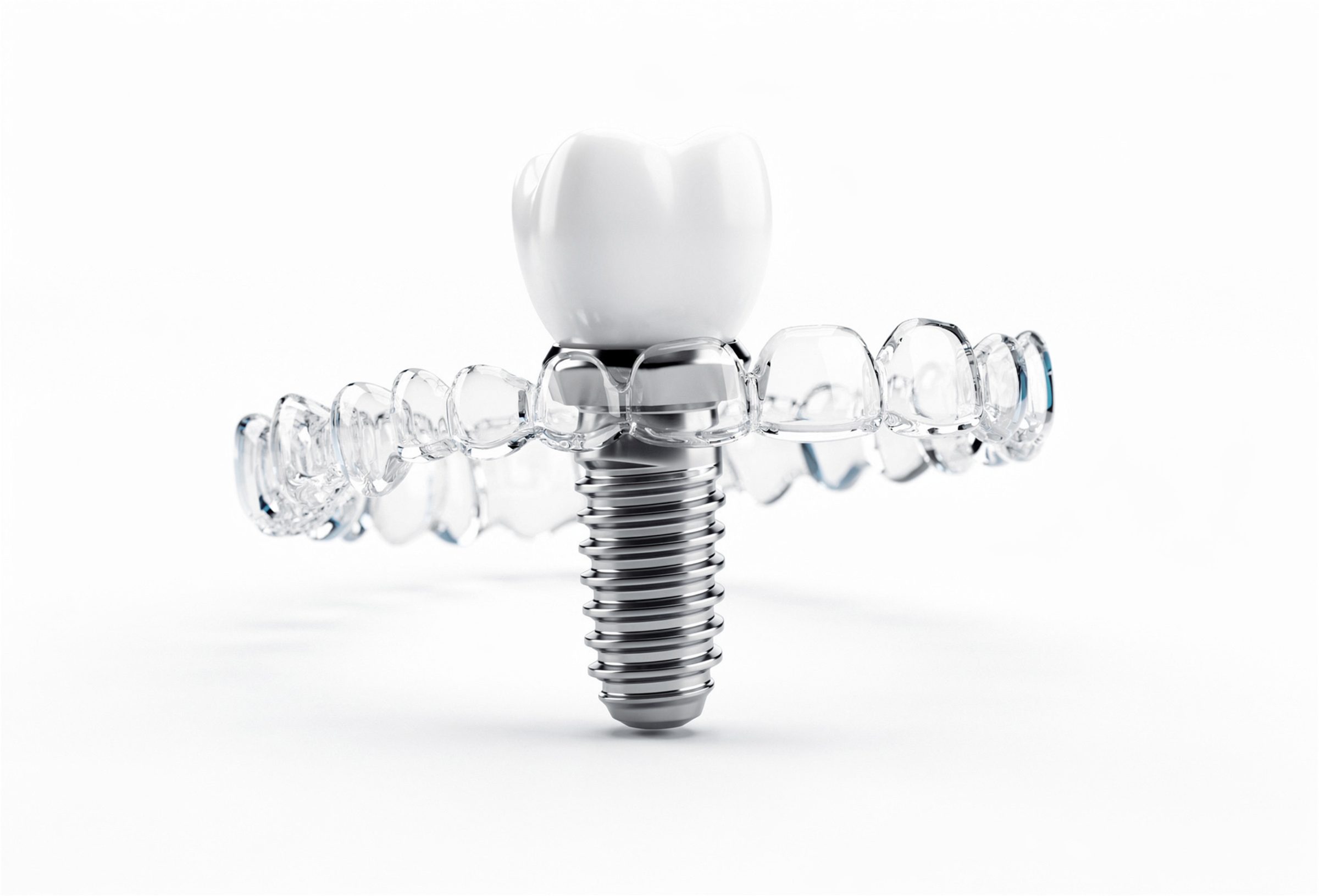
- The implant. The titanium post joins the bone and is designed to stay. When implants are lost, it is usually because the bone around them has been lost.
- The abutment and screw. The screw that holds the crown can loosen. This is usually a quick fix at a visit.
- The crown or arch. Porcelain and zirconia can chip or wear, more so if you clench or grind. A crown or arch may need repair, or replacing after many years.
- The gum and bone around it. This is the living part, and the part that most needs looking after.
What shortens the life of an implant?
Inflammation around implants is common. A review of studies found weighted average prevalences of about 43% for peri-implant mucositis, which is inflamed gum, and about 22% for peri-implantitis, which also affects the bone (Derks & Tomasi, 2015). Figures vary a lot between studies, but they show why check-ups matter. Our article on the signs of peri-implantitis explains what to look for.
Cleaning access matters too. In one study, implants that were hard to reach with a toothbrush or floss were far more often affected by peri-implantitis (Serino & Ström, 2009). That is why crowns and arches here are shaped so you can clean around them.
Other factors include clenching or grinding, smoking, diabetes that is not well controlled, and an implant placed at an angle or depth that does not suit the bone and bite.
How can you help your implants last?
- Brush twice a day and clean around each implant every day.
- Keep maintenance visits every 3 or 6 months, as Dr. Nahlah sets for you.
- Wear a night guard if you clench or grind.
- Do not smoke.
- Call early if anything changes: bleeding, a bad taste, or a crown that feels loose.
These are also the conditions of our warranty: 10 years on full-arch implant bridges, and 5 years on single implants and their crowns. Our guide on how to care for dental implants covers the daily routine.
What happens if an implant or crown fails?
A chipped crown or a loose screw is usually repaired. An implant that has lost bone may be treated, or removed and replaced once the site has healed and been rebuilt. Our page on failed dental implants explains the steps. A second opinion on implant surgery is free, as an ongoing offer, wherever the implant was placed.
Implant Lifespan Questions
Can a dental implant last 30 years or more?
Many do. Research with follow-up beyond ten to fifteen years is limited, so no one can give you a fixed number, but an implant that is kept clean and checked regularly has a good chance of lasting decades. The crown on it may need replacing sooner.
Do implants last longer than bridges?
Both have good long-term records. A traditional bridge relies on the teeth beside the gap, so if one of those teeth fails, the whole bridge is affected. An implant crown stands on its own. Which is sounder for you depends on the teeth next to the gap.
How long does an All-on-4 arch last?
The implants under a well-maintained arch can last many years, and the arch is built so it can be repaired. Teeth on the arch can wear, and some patients need a new arch after many years, especially if they grind. Full-arch implant bridges fitted by the practice have a 10-year warranty, with conditions.
Does smoking affect how long implants last?
Yes. Smoking slows healing and raises the risk of problems around implants, which is why not smoking is one of our warranty conditions.
What signs mean I should call about an implant?
Bleeding or swelling around the implant, a bad taste, gum pulling back from the crown, a crown that feels loose or a bite that feels different. Call early: small problems are much easier to treat.
Key Takeaways
- About 96% of implants were still in place after ten years in a long-term review.
- The crown or arch usually needs attention before the implant itself.
- Gum and bone inflammation is the main long-term risk, and check-ups catch it early.
- Cleaning, maintenance visits, a night guard and not smoking help implants last.
- A failed implant can often be replaced, and a second opinion is free.
If you want to know how your own implants are doing, or what to expect from new ones: Book your free consult + 3D scan at our McLean (Tysons Corner) or Alexandria office: the examination, a 3D scan and your options in writing, each with its price. The consult and scan are free for new patients, as an ongoing offer; the scan is valued at $400. Bring your insurance card, and any scans or quotes you already have.
About the author
Dr. Esam Abou Nahlah, D.D.S., M.S., FACP, is a board-certified prosthodontist (Diplomate, American Board of Prosthodontics) with offices in McLean (Tysons Corner) and Alexandria, Virginia. He has practiced since 2003, has placed over 18,000 implants, and teaches prosthodontic residents as adjunct faculty at Virginia Commonwealth University.
Research References
- Howe MS, Keys W, Richards D. Long-term (10-year) dental implant survival: a systematic review and sensitivity meta-analysis. Journal of Dentistry. 2019;84:9–21. https://pubmed.ncbi.nlm.nih.gov/30904559/
- Jung RE, Zembic A, Pjetursson BE, Zwahlen M, Thoma DS. Systematic review of the survival rate and the incidence of biological, technical, and aesthetic complications of single crowns on implants reported in longitudinal studies with a mean follow-up of 5 years. Clinical Oral Implants Research. 2012;23(Suppl 6):2–21. https://pubmed.ncbi.nlm.nih.gov/23062124/
- Patzelt SBM, Bahat O, Reynolds MA, Strub JR. The All-on-Four treatment concept: a systematic review. Clinical Implant Dentistry and Related Research. 2014;16(6):836–855. https://pubmed.ncbi.nlm.nih.gov/23560986/
- Derks J, Tomasi C. Peri-implant health and disease. A systematic review of current epidemiology. Journal of Clinical Periodontology. 2015;42(Suppl 16):S158–S171. https://pubmed.ncbi.nlm.nih.gov/25495683/
- Serino G, Ström C. Peri-implantitis in partially edentulous patients: association with inadequate plaque control. Clinical Oral Implants Research. 2009;20(2):169–174. https://pubmed.ncbi.nlm.nih.gov/19077152/
A consultation includes the 3D scan and a clear answer about what your case actually needs, before you commit to anything.

D.D.S., M.S. Diplomate of the American Board of Prosthodontics, practicing in Northern Virginia since 2013.
Meet the specialistService excellence and Stephanie is amazing! This place is very professional and caring. The consultation was really helpful. They took the time to explain everything well, making me feel comfortable and welcomed. Absolutely a great choice for dental needs.Tajala Battle · GoogleMore patient stories
A 3D scan and a clear answer about what your case actually needs, before you commit to anything.