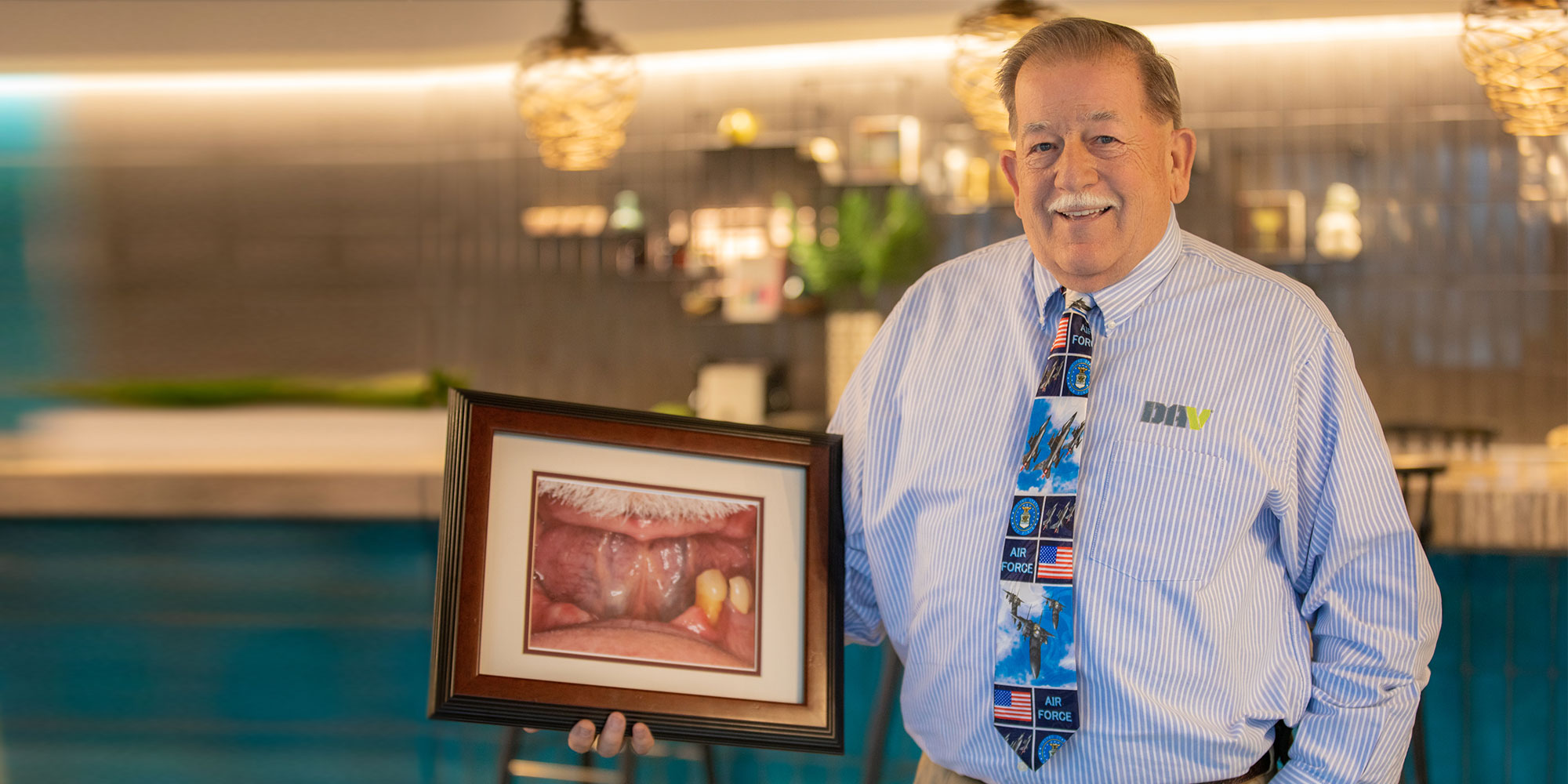
Yolanda holding a framed photograph of her smile before treatment
HomeImplantsFull-Mouth Implants

Full-Mouth Dental Implants in McLean & Alexandria, VA

Every tooth, upper and lower, on implants.

When most or all of your teeth are failing or gone, both arches can be rebuilt on implants: a fixed zirconia bridge on four to eight posts per arch, or a denture that clips onto them. Planned and placed by one board-certified prosthodontist, Dr. Esam Nahlah.

4–8 postsPer fixed arch
Same dayProvisional teeth, in most cases
3–4 moFrom surgery to the final zirconia
5 yearsWarranty, kept with six-monthly cleanings
A patient holding a framed photograph of his mouth before implant treatment
Full Mouth

Both arches, one plan.

A full-mouth case is planned as one job rather than tooth by tooth. The cone-beam scan maps the bone in both jaws, and the upper and lower teeth are designed together so the bite balances. On this site these cases are called double arch.

  • Fixed teeth that stay in: screwed down, not taken out at night
  • Cared for like natural teeth, with six-monthly cleanings
  • Implants load the jawbone, which a denture resting on the gums cannot do
  • Zirconia, resistant to decay and to fractures and chips
  • Designed and milled in the practice's own laboratory
Your Options

Three ways to replace every tooth.

Your scan, your bone and what you want from the result decide between them.

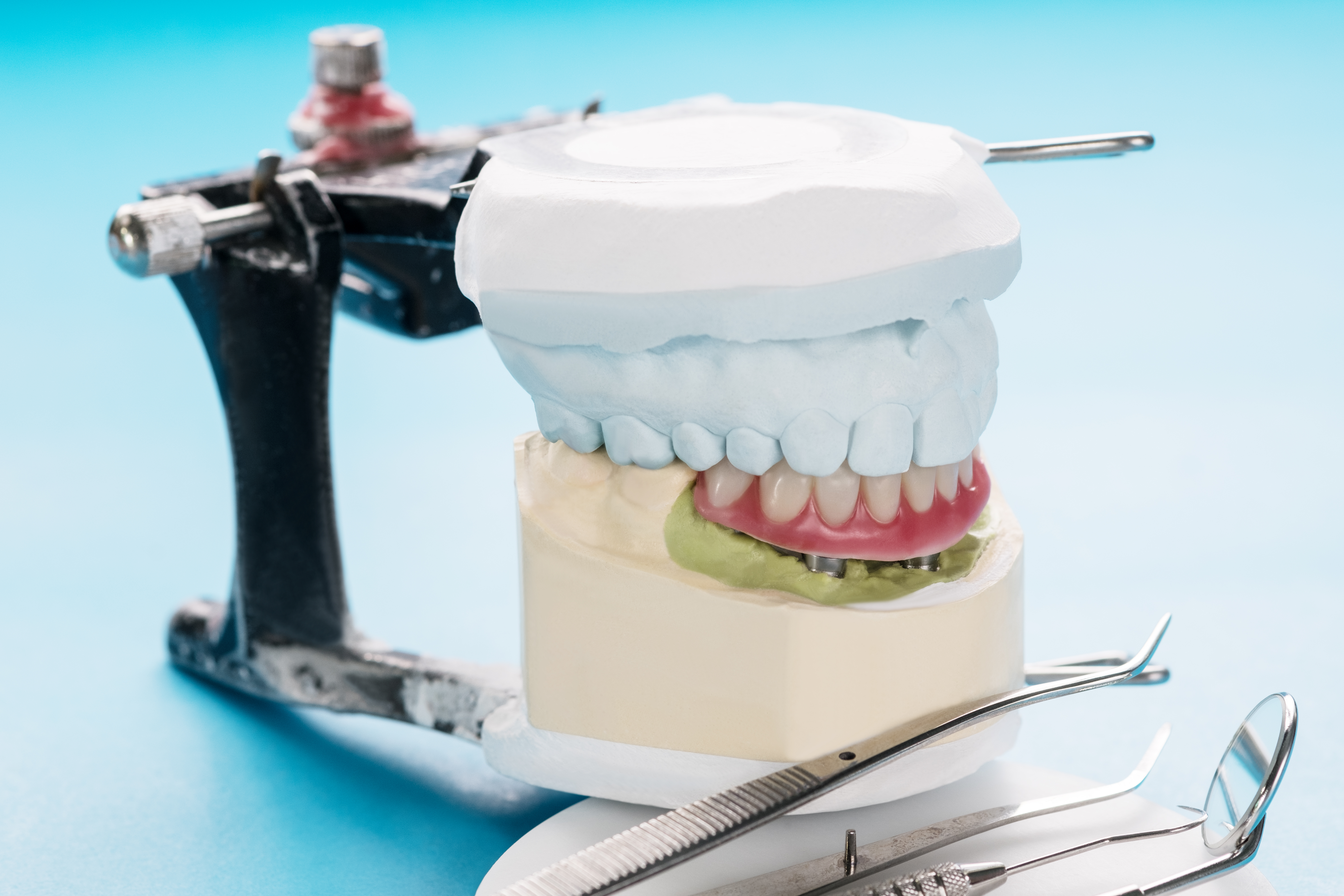
Lab model of an implant-supported denture clipped onto implant posts, mounted on an articulator01

Implant-Supported Dentures

A removable denture on each arch, clipped onto two or more implants. Around 60% of natural function at a moderate cost, and it comes out for cleaning.


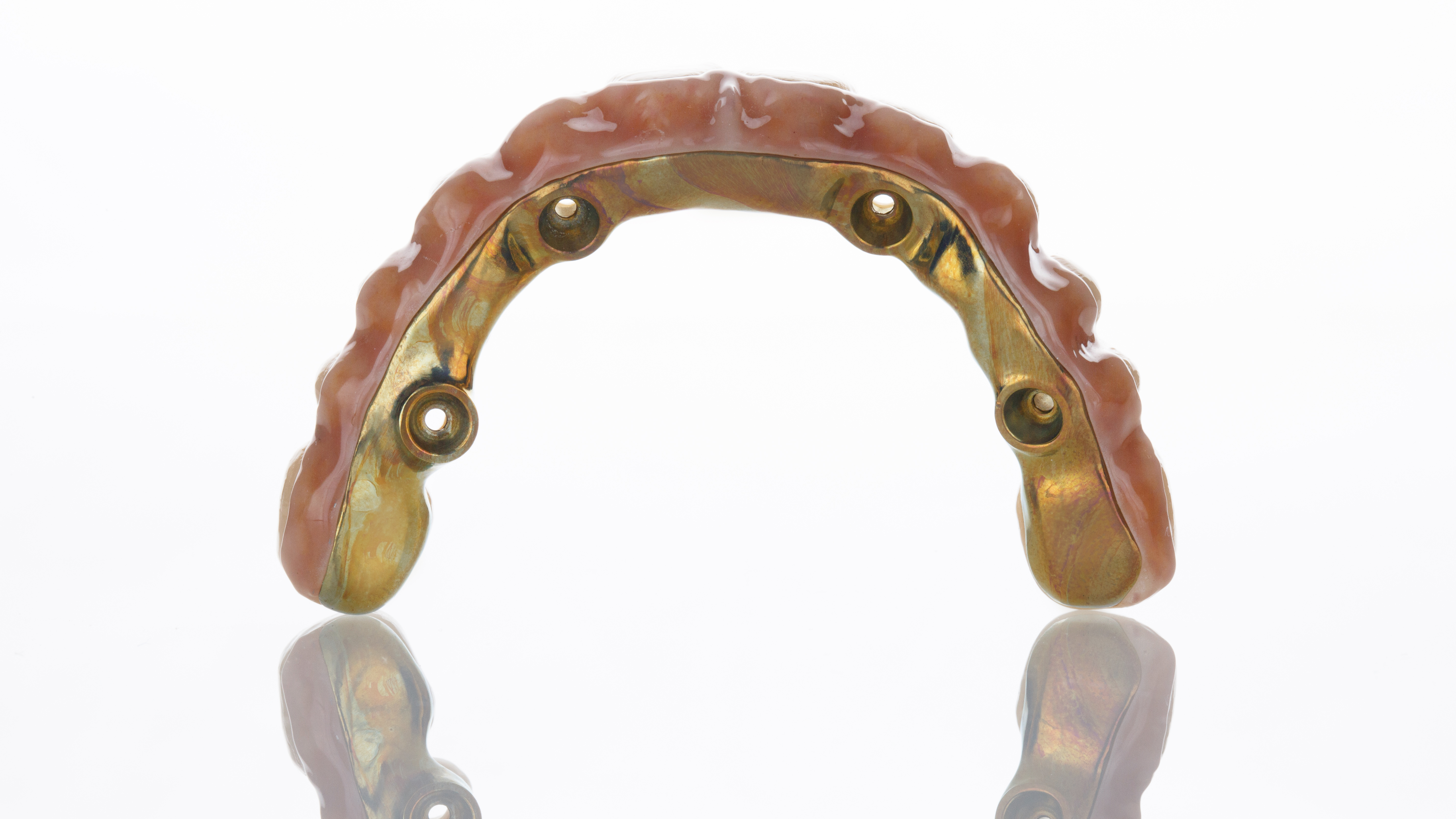
Underside of a full-arch implant bridge, showing its metal framework and four screw-access channels02

All-on-4 Full Arches

A fixed zirconia bridge on four implants per arch, the rear two tilted toward stronger bone. In most cases you leave surgery with fixed provisional teeth.
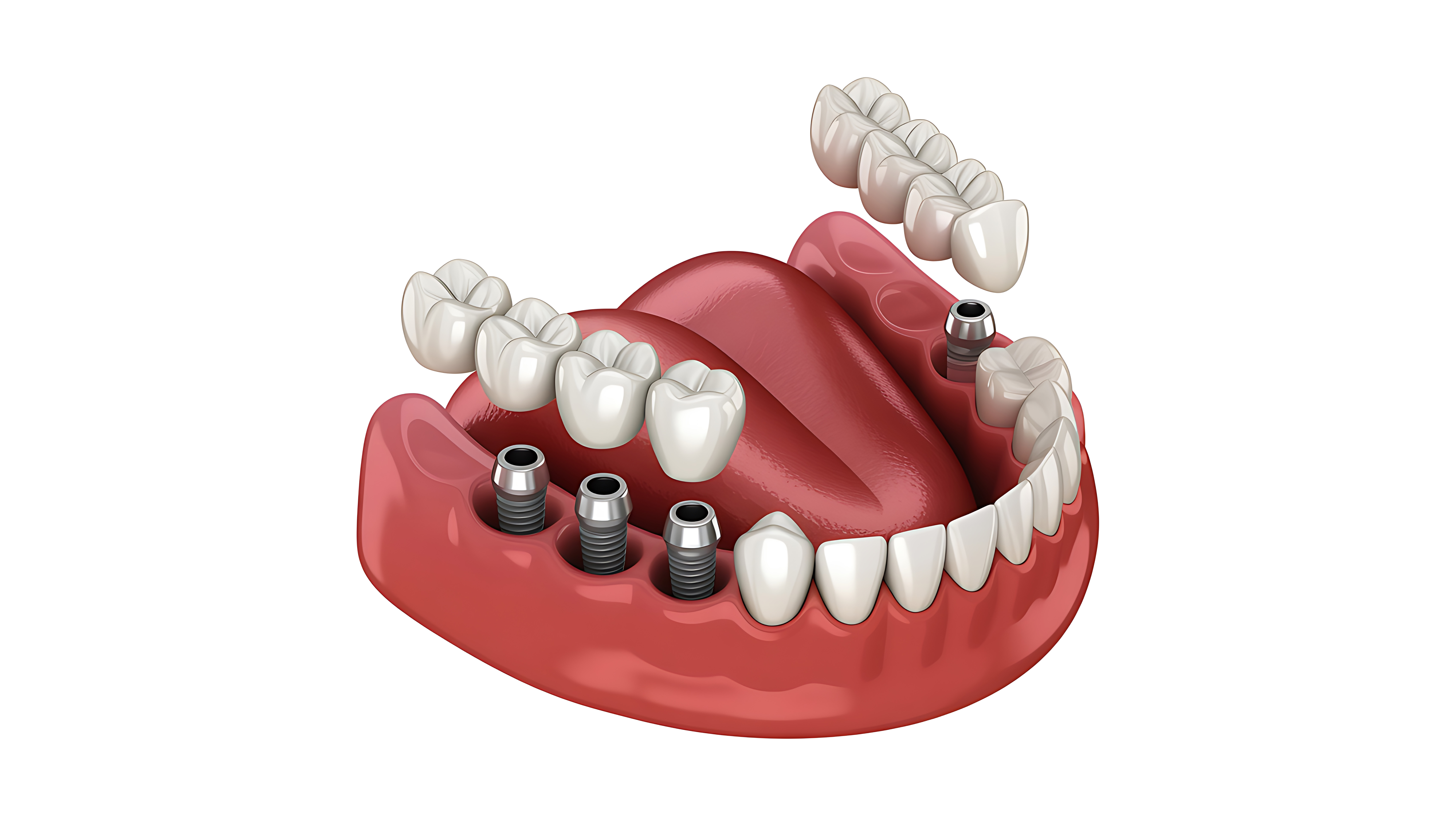
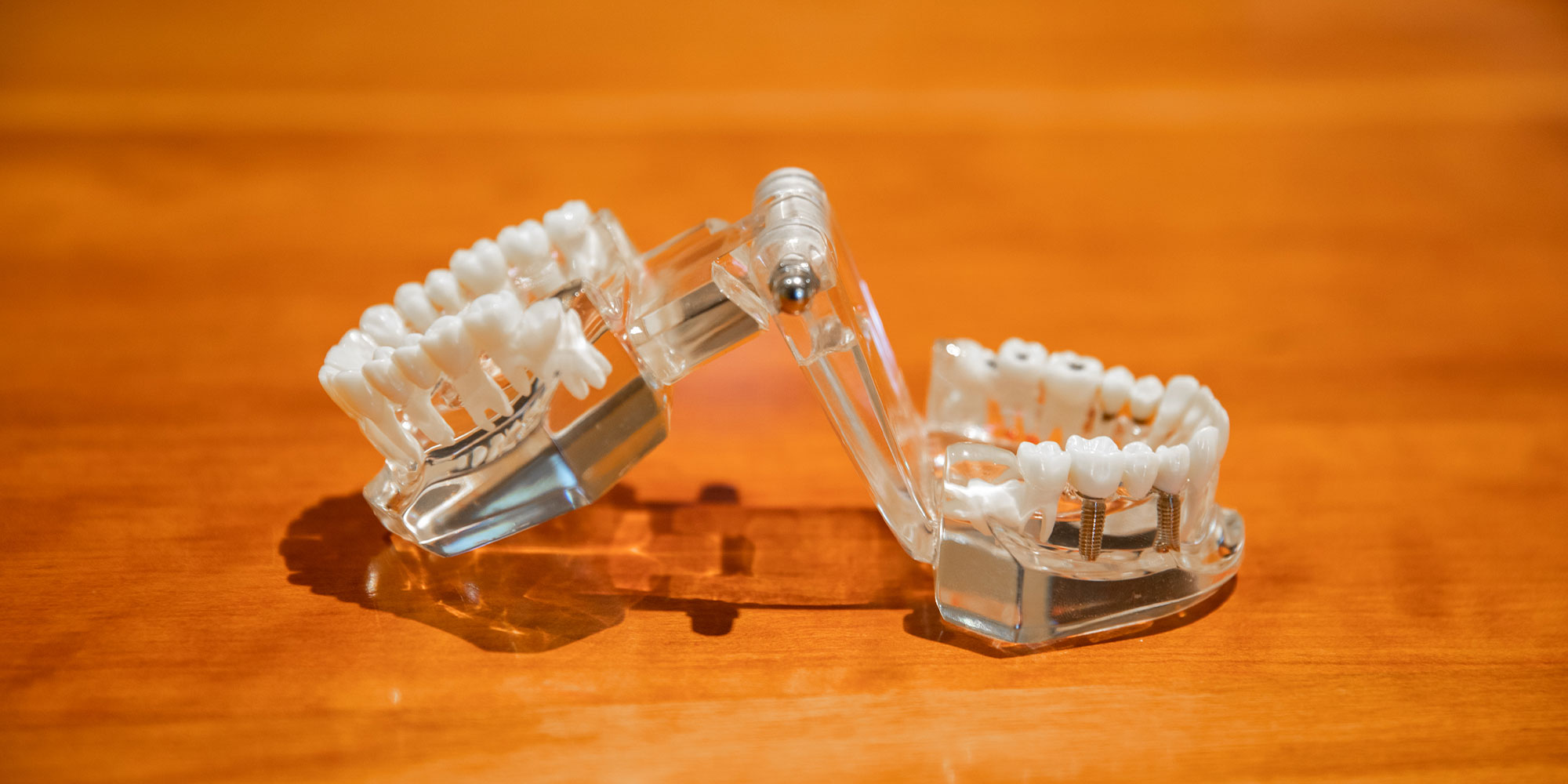
Illustration of implant-supported bridges lowered onto implant posts in a lower jaw model03

Fixed Bridges on More Implants

Where the bone and the bite call for it, each fixed arch is carried on up to eight implants. Over 98% of natural function, and the highest cost of the three.

All three compared
Bone

Bone loss is often where it starts, not where it ends.

Years of missing teeth or loose dentures let the jawbone recede. Many patients still have enough bone for implants, and many of the rest qualify after bone grafting or extractions. With All-on-4, the back two implants tilt toward the stronger bone near the front of the jaw, so bone loss often does not rule you out.
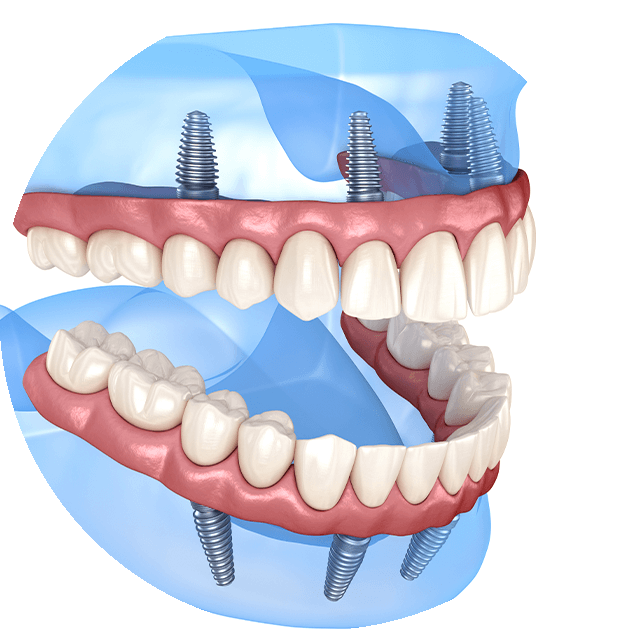
Four implants carrying a full arch
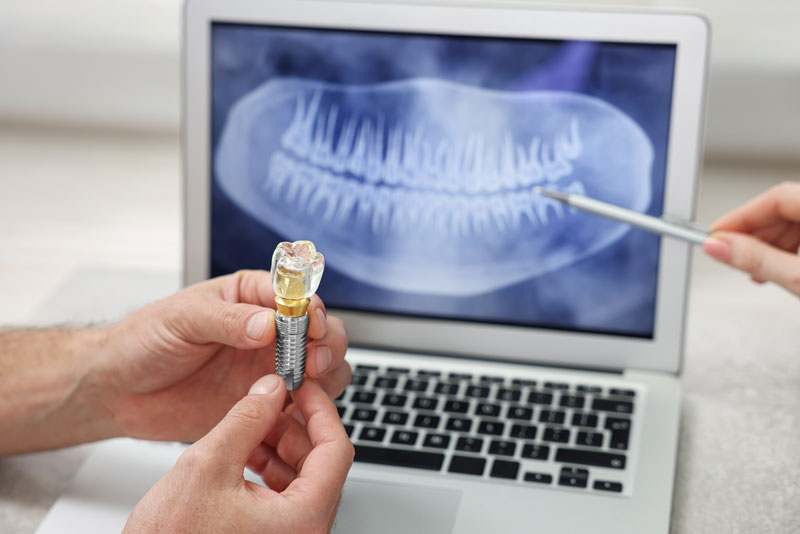
3DCone-beam scan of both jaws
A clinician showing a patient their X-ray beside an implant model
GuidedPlaced through a printed guide
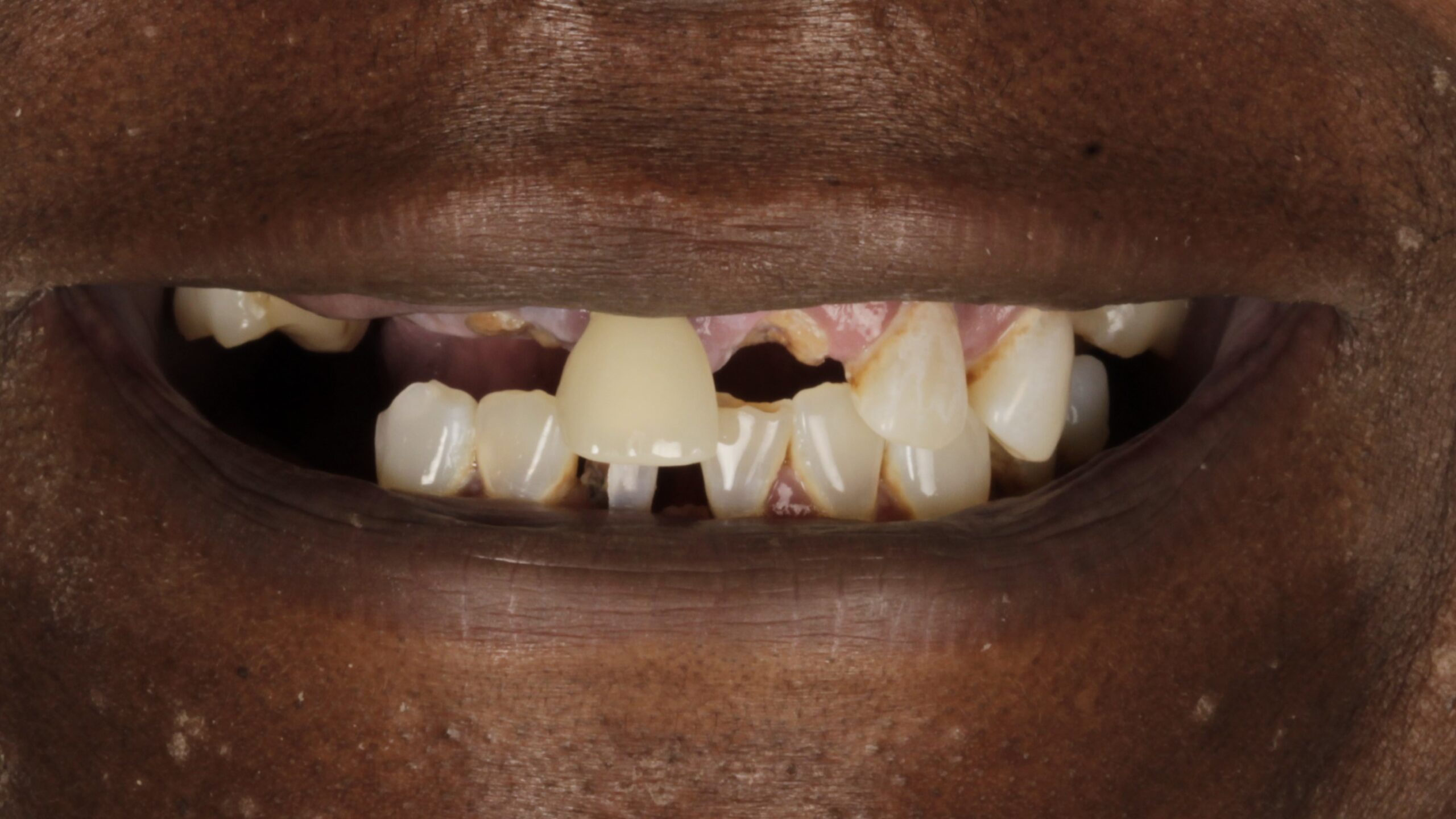
Smile before All-on-4 treatment, with missing, broken and stained upper and lower teeth
Before
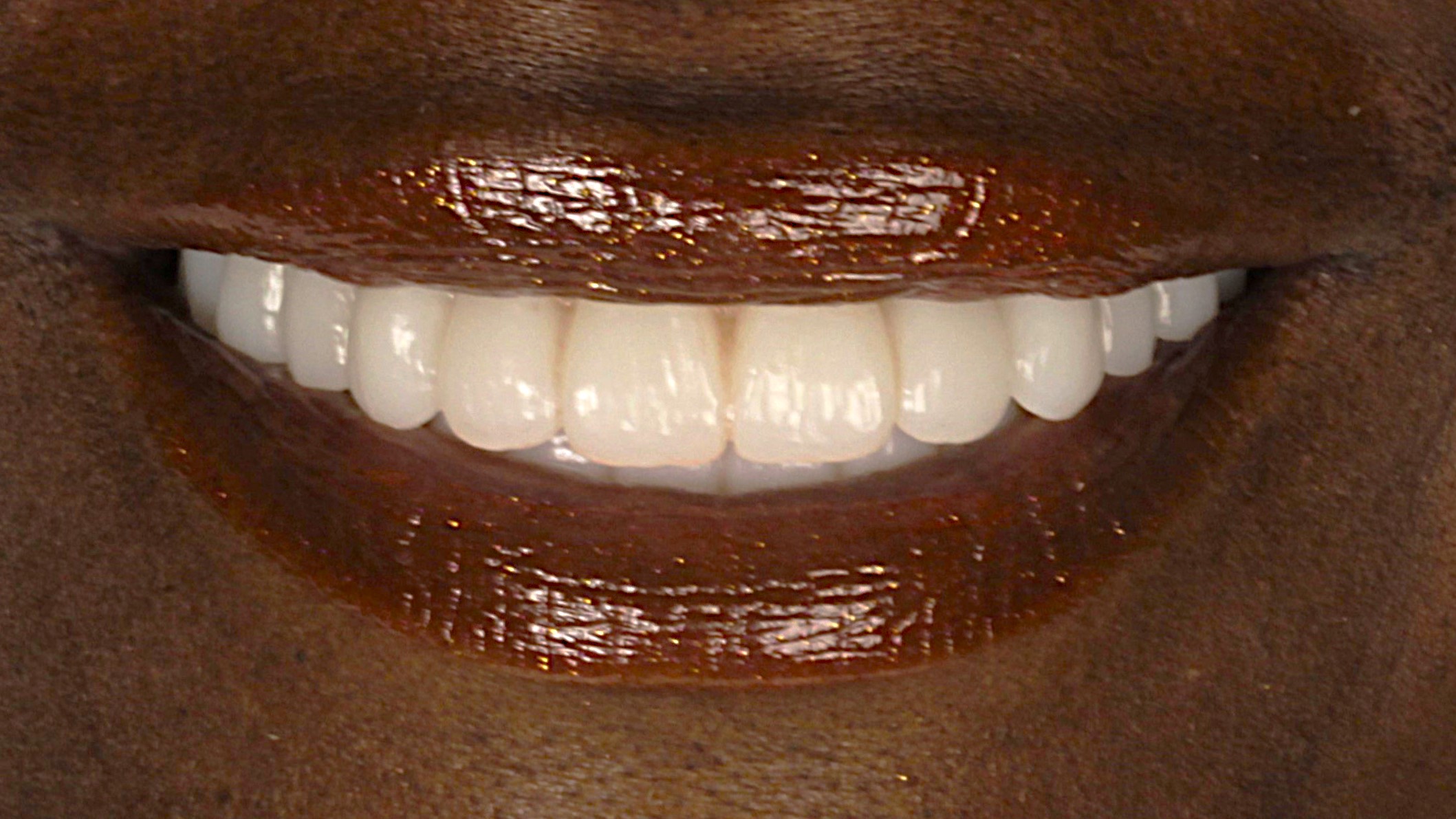
The same smile after All-on-4 treatment, with full upper and lower arches of even, natural-looking teeth
After: a double arch

Every implant is planned on the scan and placed through a printed guide, at the planned angle and depth, for smaller incisions and a shorter recovery. Where bone has to be rebuilt first, grafting is its own procedure with several months of healing, and it is written into the timeline at the first consultation. How dental implants work
The Process

From the first scan to two finished arches.

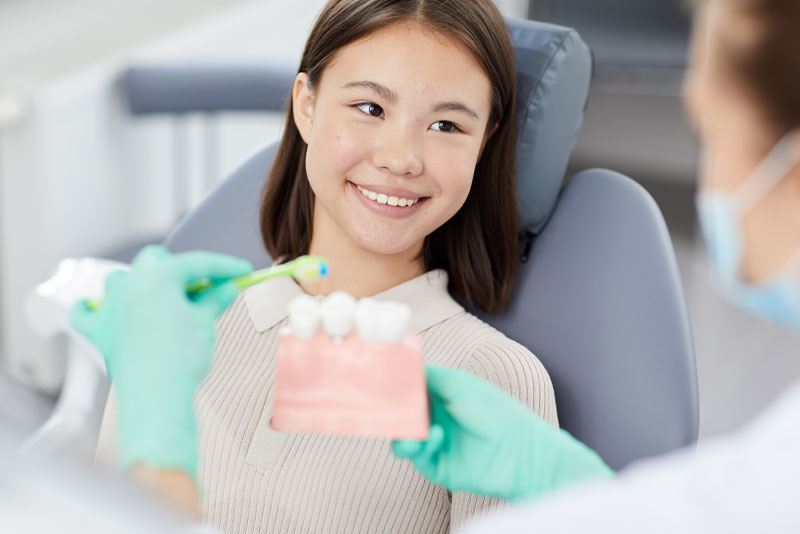
A clinician showing a patient a dental model during a consultation01

Scan and plan

An examination and a cone-beam scan of both jaws. Pricing, insurance and financing are discussed at this visit, before you commit to anything.

A clinician showing a patient their X-ray beside an implant model02

Extractions and grafting

Failing teeth come out and thin bone is built up where the plan needs it. The specialist who removes a tooth is the one who replaces it.

Oral surgery
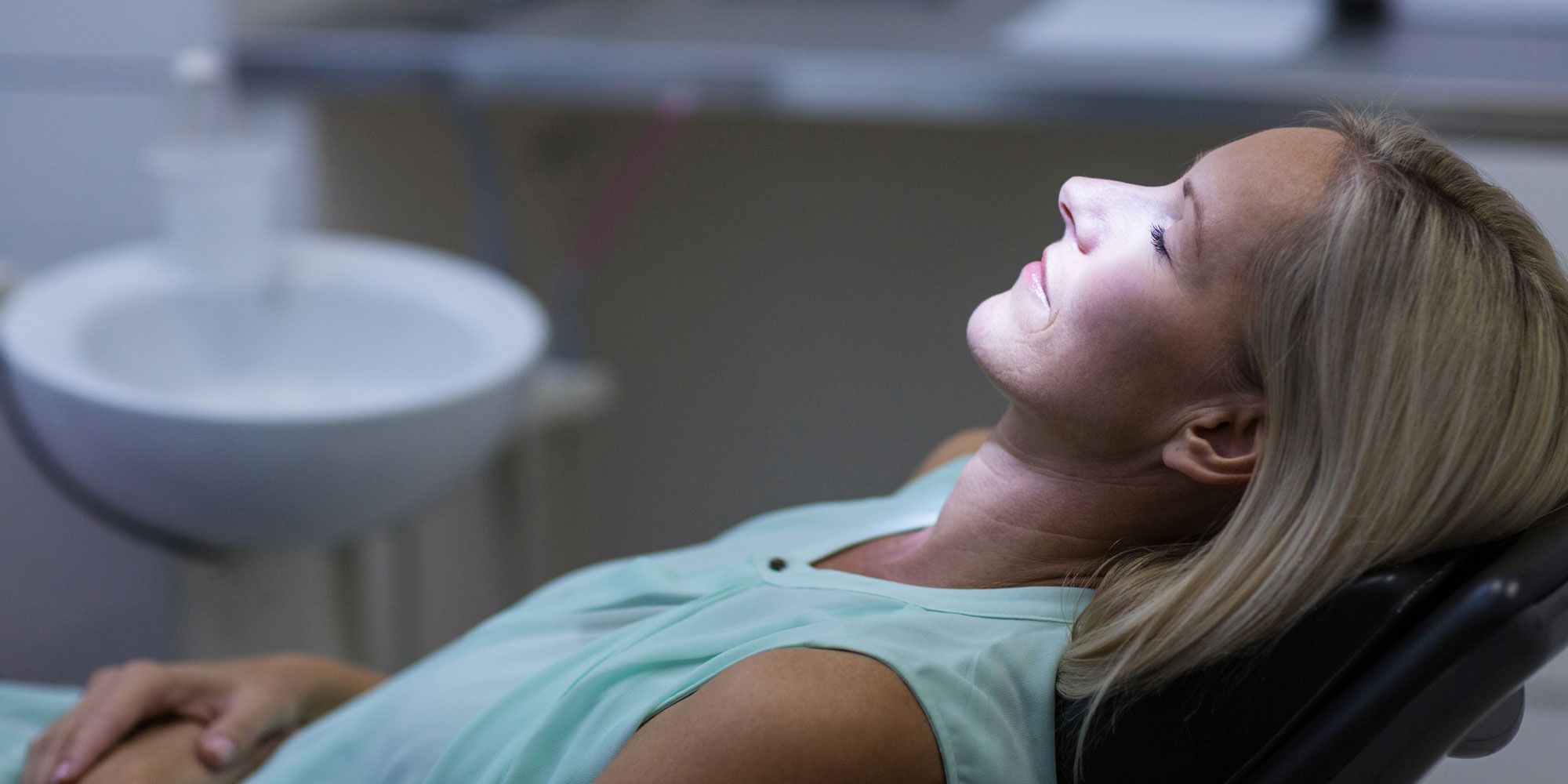
A patient resting with her eyes closed in the chair under sedation03

Implant day

The implants go in at the office under local anesthetic, with nitrous oxide or oral sedation, guided by the scan. With All-on-4, most patients leave wearing fixed provisional teeth.
A restored full arch04

Zirconia arches

Three to four months later, once the implants have fused, the final zirconia arches are fitted, shaped and bite-balanced by the specialist who planned them.

Real Cases

Two double-arch cases from this practice.

Case 21, double-arch All-on-4: smile before treatment by prosthodontist Dr. Esam Nahlah, Northern VirginiaCase 21, double-arch All-on-4: smile after treatment by prosthodontist Dr. Esam Nahlah, Northern VirginiaBeforeAfter
Double-arch All-on-4 · case 21
Case 22, double-arch All-on-4: smile before treatment by prosthodontist Dr. Esam Nahlah, Northern VirginiaCase 22, double-arch All-on-4: smile after treatment by prosthodontist Dr. Esam Nahlah, Northern VirginiaBeforeAfter
Double-arch All-on-4 · case 22

All twenty-eight cases

Notebook, pen and calculator on a wooden desk, for working out the cost of dental treatment
Affording It

What a full mouth costs, and how it is paid.

The number depends on how many implants each arch needs, whether extractions or grafting come first, and whether the teeth are a removable denture or fixed zirconia. It is set at your consultation, once the scan has been read; two quotes for the same mouth can differ by thousands for exactly those reasons.

Most PPO dental plans are accepted, and claims are filed for you. Financing reaches $60,000 with terms of up to 96 months, and a financial coordinator helps you apply.

Cost and financing in full

Questions

Full-mouth implants, answered.

Who is a candidate for full-mouth dental implants?
Adults whose teeth are mostly missing or failing, and people tired of loose dentures. Many already have enough bone; many of the rest qualify after bone grafting or extractions. The cone-beam scan at the consultation answers it for your mouth.
How many implants does a full mouth need?
Per arch: two or more for a removable implant denture, four for an All-on-4 fixed arch, and up to eight for a fixed bridge on more implants. The scan decides how many your bone will carry.Implant-supported dentures →
How long does full-mouth treatment take?
With All-on-4, about three to four months from surgery to the final zirconia arches, then a further two to four months for complete healing around them. Grafting, if you need it, adds several months of healing before the implants go in.
Will I have teeth while the implants heal?
Yes. With All-on-4, in most cases you leave the surgery wearing fixed provisional teeth, which stay in place while the implants fuse.All-on-4 in full →
How do I look after full-mouth implants?
A fixed arch is brushed and flossed like natural teeth and stays in at night. The five-year warranty asks one thing of you: the six-monthly cleanings.The five-year warranty →
Is sedation available for full-mouth surgery?
Yes: nitrous oxide or oral sedation, given at the office by the practice's own team. The practice does not offer IV sedation or general anesthesia.Sedation options →

Find out what your mouth needs.

A cone-beam scan of both jaws, and a straight answer, before you commit to anything.