19 November 2026
Quick answer: Peri-implantitis is inflammation around an implant that damages the bone holding it. Early signs are bleeding when you brush, red or swollen gum, a bad taste or pus, and gum pulling back from the crown. Later, the implant may feel loose. It often causes no pain early on, so maintenance visits with gum checks and X-rays are how it is caught.
Implants cannot decay, but the gum and bone around them can become inflamed, much like gum disease around a natural tooth. Caught early, the gum-only stage is usually reversible. Left alone, it can cost the implant. Here is what to look for and what happens next.
What is peri-implantitis?
There are two stages. Peri-implant mucositis is inflammation of the gum around an implant, without bone loss. Peri-implantitis is inflammation that has also started to destroy the bone that holds the implant.
Both are common. A review of studies found weighted average prevalences of about 43% for peri-implant mucositis and about 22% for peri-implantitis (Derks & Tomasi, 2015). Figures vary a lot between studies, but they show why every implant needs regular checks.
What are the signs of peri-implantitis?
- Bleeding around the implant when you brush or floss.
- Red, swollen or tender gum around the implant.
- A bad taste, bad breath, or pus around the implant.
- Gum pulling back, so more of the crown or the metal shows.
- A bite that feels different, or an implant or crown that feels loose.
Pain is often absent until late, which is why problems can go unnoticed between visits.
What causes peri-implantitis?
Plaque is the main cause. Cleaning access matters: in one study, implants that were hard to reach with a toothbrush or floss were far more often affected (Serino & Ström, 2009). Other factors include a history of gum disease, smoking, diabetes that is not well controlled, cement left under a crown, heavy bite force from clenching or grinding, and an implant placed at an angle or depth that does not suit the bone.
How is peri-implantitis diagnosed?
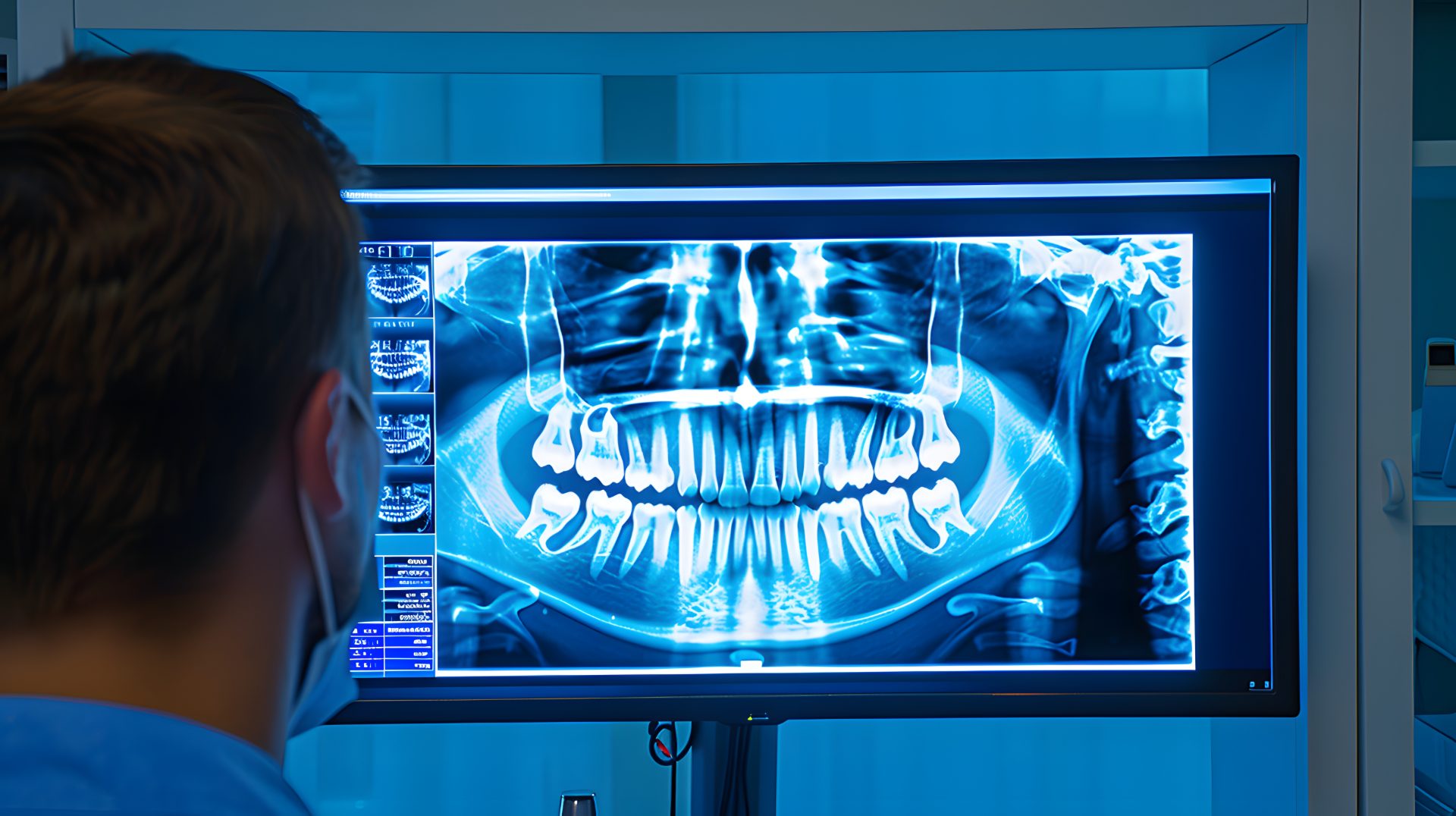
At a maintenance visit, the gum around each implant is gently measured and checked for bleeding, and X-rays are compared with earlier ones to see whether bone levels have changed. A cone-beam 3D scan is used where more detail is needed.
How is peri-implantitis treated?
Treatment depends on how far it has gone. Mucositis is usually treated with professional cleaning and better home care. Early peri-implantitis may need deeper cleaning of the implant surface, adjustments to the crown so it is easier to clean, and medication in some cases. More advanced cases may need surgery to clean the implant and, where possible, rebuild bone. Some implants have lost too much bone to keep, and are removed and replaced once the site has healed.
Our page on failed dental implants explains the repair steps. A second opinion on implant surgery is free, as an ongoing offer, whether the implant was placed here or somewhere else.
How can you prevent peri-implantitis?
- Clean around each implant every day, with floss, small interdental brushes or a water flosser as shown at your visit.
- Keep maintenance visits every 3 or 6 months, as Dr. Nahlah sets for you.
- Wear a night guard if you clench or grind.
- Do not smoke, and keep diabetes well controlled.
These are also conditions of our warranty. Our guide on how to care for dental implants covers the daily routine, and how long dental implants last covers what helps them last.
Peri-Implantitis Questions
Does peri-implantitis hurt?
Often not, especially early on. That is why it can go unnoticed until bone has been lost, and why regular check-ups matter.
Can peri-implantitis be reversed?
Peri-implant mucositis, which affects the gum only, is usually reversible with cleaning and better home care. Once bone has been lost, treatment aims to stop it and, where possible, rebuild some of it.
How soon after placement can peri-implantitis start?
It can appear months or years after an implant is placed, so maintenance continues for as long as you have the implant.
Is bleeding around an implant always peri-implantitis?
No. Bleeding often means the gum is inflamed but the bone is unaffected, which is reversible. Any bleeding around an implant is still worth checking, because the early stage is easier to treat.
My implant was placed elsewhere. Can you check it?
Yes. A second opinion on implant surgery is free, as an ongoing offer. Bring any X-rays, scans or notes from the practice that placed it.
Key Takeaways
- Peri-implantitis is inflammation around an implant that damages the bone holding it.
- Bleeding, swelling, a bad taste and receding gum are the early signs.
- It often causes no pain early on, so regular visits are how it is caught.
- Early cases are usually treated with cleaning; advanced cases may need surgery or a new implant.
- A second opinion on an implant placed elsewhere is free.
If an implant is bleeding, sore or feels different: Book your free consult + 3D scan at our McLean (Tysons Corner) or Alexandria office: the examination, a 3D scan and your options in writing, each with its price. The consult and scan are free for new patients, as an ongoing offer; the scan is valued at $400. Bring your insurance card, and any scans or quotes you already have.
About the author
Dr. Esam Abou Nahlah, D.D.S., M.S., FACP, is a board-certified prosthodontist (Diplomate, American Board of Prosthodontics) with offices in McLean (Tysons Corner) and Alexandria, Virginia. He has practiced since 2003, has placed over 18,000 implants, and teaches prosthodontic residents as adjunct faculty at Virginia Commonwealth University.
Research References
- Derks J, Tomasi C. Peri-implant health and disease. A systematic review of current epidemiology. Journal of Clinical Periodontology. 2015;42(Suppl 16):S158–S171. https://pubmed.ncbi.nlm.nih.gov/25495683/
- Serino G, Ström C. Peri-implantitis in partially edentulous patients: association with inadequate plaque control. Clinical Oral Implants Research. 2009;20(2):169–174. https://pubmed.ncbi.nlm.nih.gov/19077152/
A consultation includes the 3D scan and a clear answer about what your case actually needs, before you commit to anything.
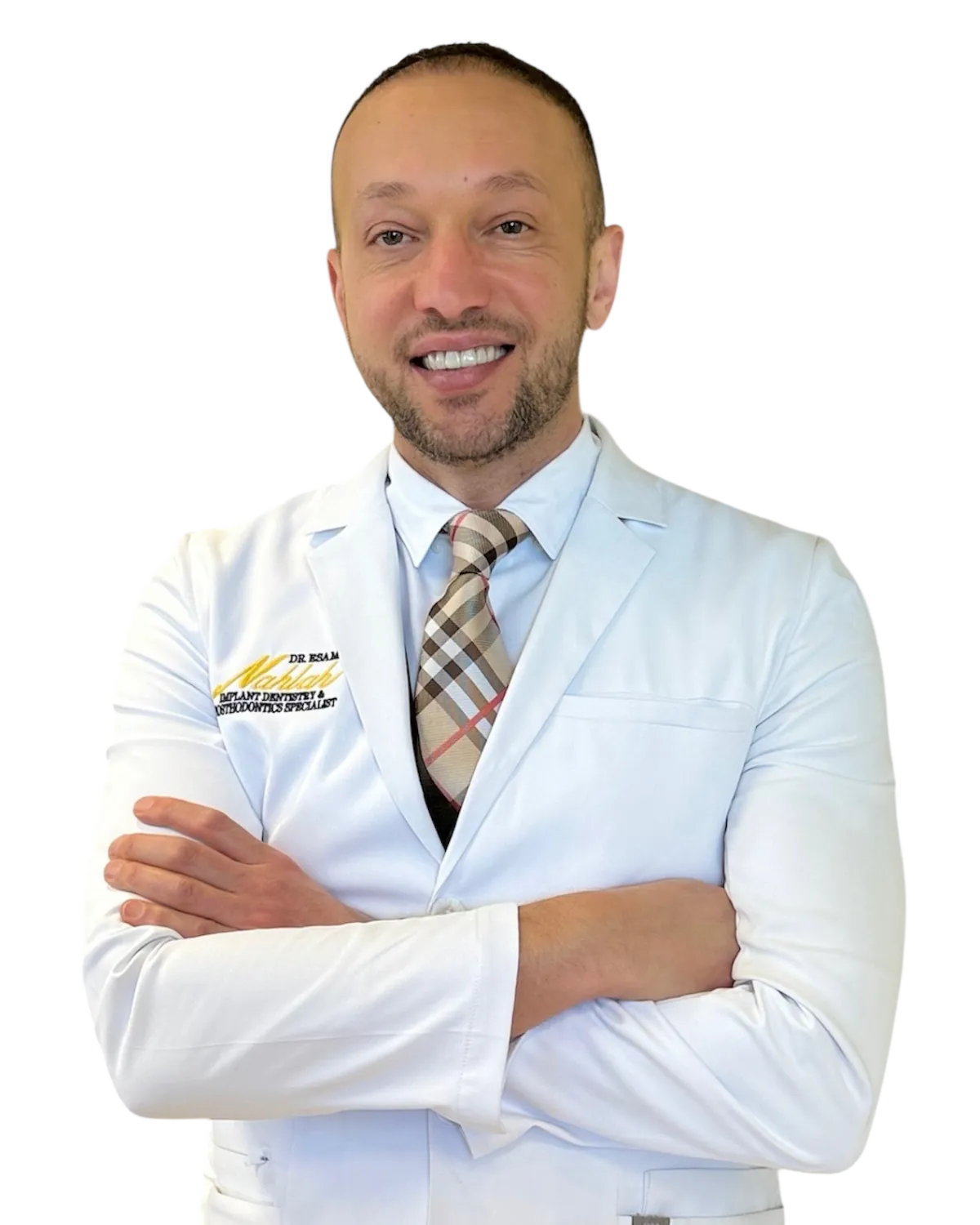
D.D.S., M.S. Diplomate of the American Board of Prosthodontics, practicing in Northern Virginia since 2013.
Meet the specialistService excellence and Stephanie is amazing! This place is very professional and caring. The consultation was really helpful. They took the time to explain everything well, making me feel comfortable and welcomed. Absolutely a great choice for dental needs.Tajala Battle · GoogleMore patient stories
A 3D scan and a clear answer about what your case actually needs, before you commit to anything.