19 November 2026
Quick answer: Dental implants can replace one tooth, several teeth or every tooth in an arch. One missing tooth usually takes one implant and crown. Three or four missing teeth in a row can often be replaced with two implants holding a bridge. A full arch can be fixed on four or more implants, or held by a snap-in denture on two to four implants. A 3D scan shows which option fits your bone and bite.
The number of missing teeth is only part of the picture. Where the gaps are, how much bone is left, the health of the teeth that remain and how you want the result to feel all shape the plan. This guide walks through the three main situations, with typical fee ranges for each.
What if only one tooth is missing?
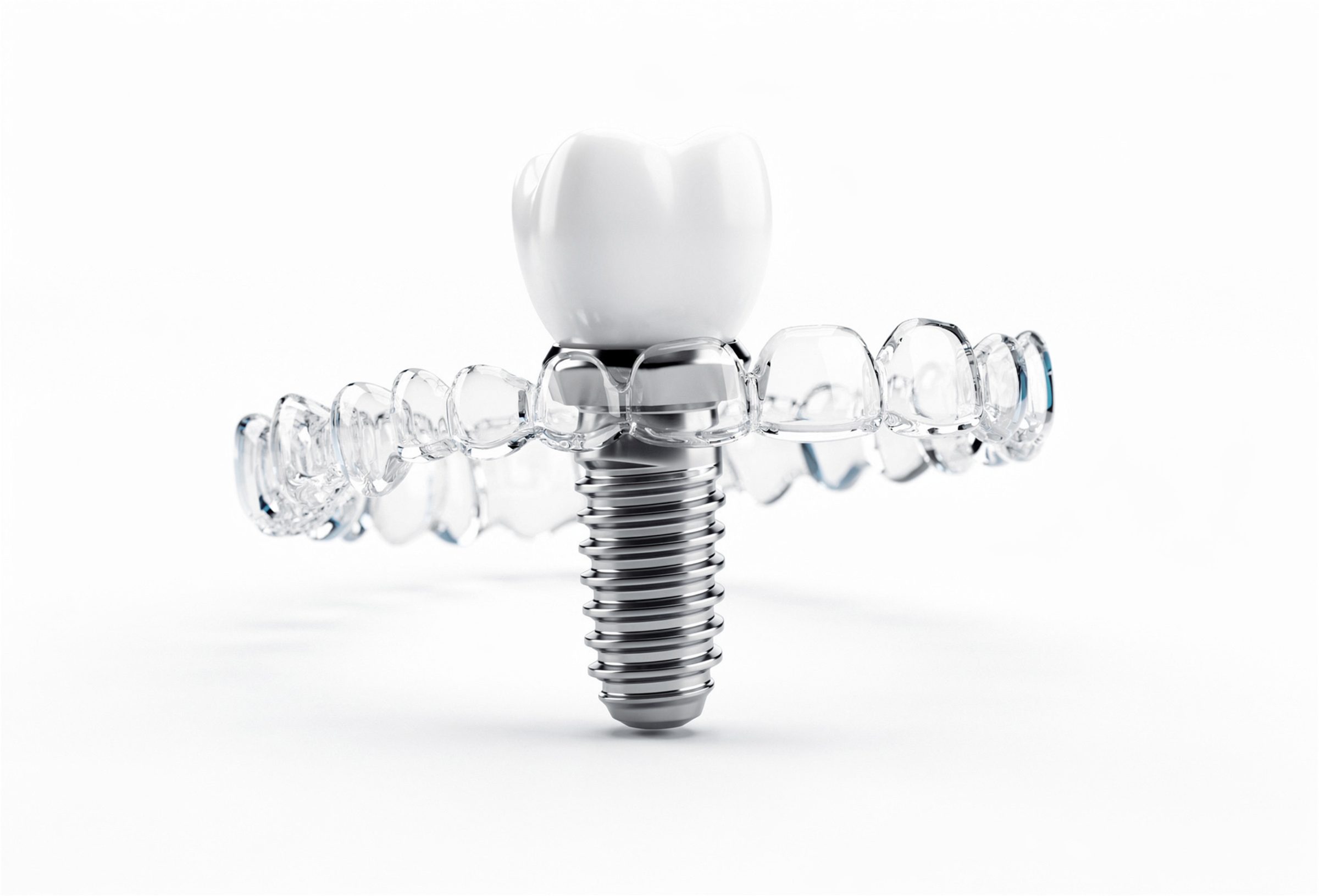
A single implant replaces the root, and an abutment and crown replace the visible tooth. The teeth on either side are not cut down, as they would be for a traditional bridge, and the implant takes its own bite.
As a guide, at Dr. Nahlah's practice a single implant with its abutment and crown typically ranges from $4,000 to $6,000. Bone grafting ($500 to $3,000 per site) or a sinus lift ($1,500 to $3,500 per side) costs extra where needed. Sedation is optional and not included in this range. Ranges reflect typical cases. Your exact fee is confirmed in writing at your consultation, after your 3D scan, and your treatment plan may fall outside this range depending on your needs.
Single implant crowns show high survival in long-term reviews, with technical issues such as a loose screw or chipped porcelain possible over the years (Jung et al., 2012). A single implant and its crown fitted by the practice come with a 5-year warranty, with conditions. The dental implants page explains each step.
What if several teeth are missing?
Several missing teeth do not always need one implant each. The usual options are:
- Separate implants where the gaps are apart from each other, each with its own crown.
- An implant bridge where three or four teeth in a row are missing: two implants hold a bridge that fills the span, which means fewer implants and often less grafting.
- A mix of implants and conventional crowns and bridges, where the neighboring teeth already need crowns.
Spacing matters in the front of the mouth. Research on the gum between implants found that two implants placed side by side often leave less gum height between them than an implant next to a natural tooth (Tarnow et al., 2003). That is one reason an implant bridge can look more natural than a row of single implants in the smile zone.
A plan for several teeth is priced from the number of implants and crowns it needs, and the fee is confirmed in writing after your scan. The implant cost page lists what moves the fee. Sedation is optional and not included in this range. Ranges reflect typical cases. Your exact fee is confirmed in writing at your consultation, after your 3D scan, and your treatment plan may fall outside this range depending on your needs.
What if most or all of the teeth in an arch are missing or failing?
Once most of the teeth in an arch are missing or cannot be saved, replacing them one by one rarely makes sense. There are two main approaches:
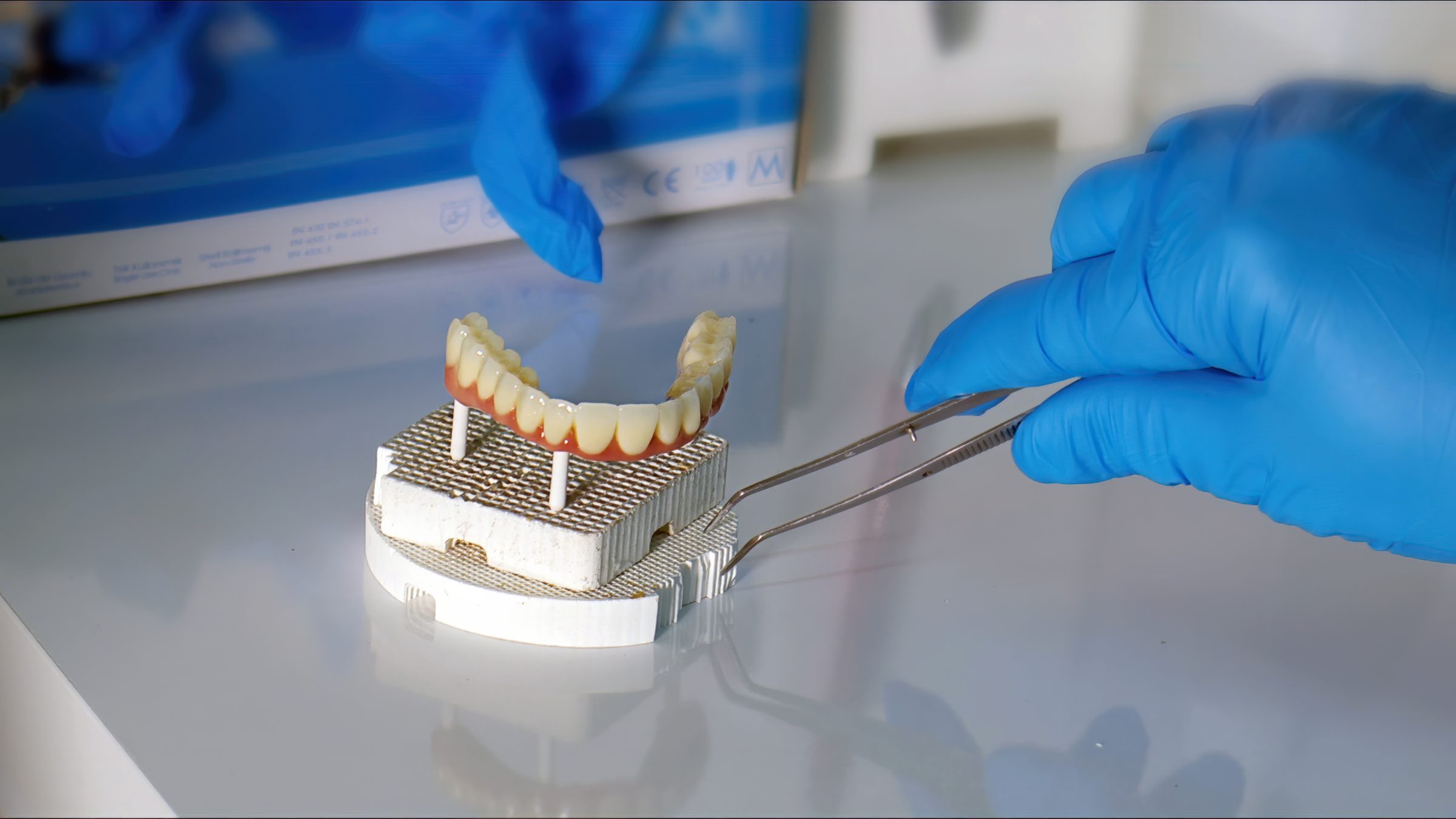
- A fixed full arch. Four or more implants hold a full row of teeth that only the practice removes. All-on-4 typically ranges from $25,000 to $35,000 per arch for FP3 (teeth with a gum-colored base) and $30,000 to $40,000 per arch for FP1 (teeth only, with no pink base).
- A snap-in denture. Two to four implants hold a denture that clips into place and comes out for cleaning. An implant-supported denture typically ranges from $12,000 to $22,000 per arch.
Sedation is optional and not included in this range. Ranges reflect typical cases. Your exact fee is confirmed in writing at your consultation, after your 3D scan, and your treatment plan may fall outside this range depending on your needs.
A systematic review of the All-on-Four concept reported high implant and prosthesis survival in the studies available (Patzelt et al., 2014). Whether FP1 or FP3 suits you depends on how much bone and gum have been lost and where your lip sits when you smile (Bidra & Agar, 2010). Full-arch implant bridges fitted by the practice come with a 10-year warranty, with conditions.
What else shapes which option is right for you?
- Bone. The jawbone shrinks after a tooth is lost, most in the first months (Tan et al., 2012), so a gap that has been open for years may need grafting first.
- Location. Upper back teeth sit under the sinus. Where bone there is thin, a sinus lift can make room, and implants placed with sinus floor elevation showed high survival in a systematic review (Pjetursson et al., 2008).
- The teeth that remain. Healthy neighbors can be left alone. Teeth with a poor outlook may be better replaced as part of the same plan.
- Your bite and habits. Clenching or grinding puts extra force on implants, so a night guard is part of the plan.
- Your health. Smoking, diabetes and some medicines affect how bone heals.
- Your preference. Some people want teeth that never come out. Others prefer a denture they can remove and clean.
Dr. Nahlah is a board-certified prosthodontist, so the same specialist plans the teeth and places the implants. Each plan starts from the final teeth on your cone-beam scan and works back to where the implants go.
Does insurance help with the cost?
Dental plans often pay part of an implant, up to the plan's annual maximum. We are out of network with most dental PPO plans and file the claims on your behalf. Our article on dental implant insurance explains what plans usually pay, and the financing page lists the lenders we work with, subject to lender approval.
Missing Teeth Questions
Do I need one implant for every missing tooth?
No. A single tooth usually takes one implant, but three or four missing teeth in a row can often be replaced with two implants holding a bridge, and a full arch can be fixed on four or more implants. Fewer implants can mean less surgery and less grafting, where the bone allows it.
How many implants does a full arch need?
Most fixed full arches use four to six implants. A snap-in denture can be held on two to four. The number depends on the volume and quality of your bone, the opposing teeth and your bite, all checked on a 3D scan.
Can implants replace teeth if I have worn a denture for years?
Often, yes. Long-term denture wearers have usually lost some bone, so the plan may include grafting, a sinus lift, or a design that uses the bone where it is thickest. Our guide to switching from dentures to implants covers this.
Is a bridge on implants cheaper than one implant per tooth?
It often is, because fewer implants are needed. Whether a bridge is sound for you depends on the length of the gap, the bone and your bite. Each option is priced in writing after your scan.
What if I was told I am not a candidate for implants?
Many people told no become candidates once bone is rebuilt or a different design is used. See your options if you are not a candidate yet. A second opinion on implant surgery is free, as an ongoing offer.
Key Takeaways
- One missing tooth usually takes one implant and crown, typically $4,000 to $6,000.
- Several missing teeth can often share implants through an implant bridge.
- A full arch can be fixed (FP1 or FP3) or snap-in, each with its own fee range.
- Bone, location, bite and health shape the plan as much as the number of teeth.
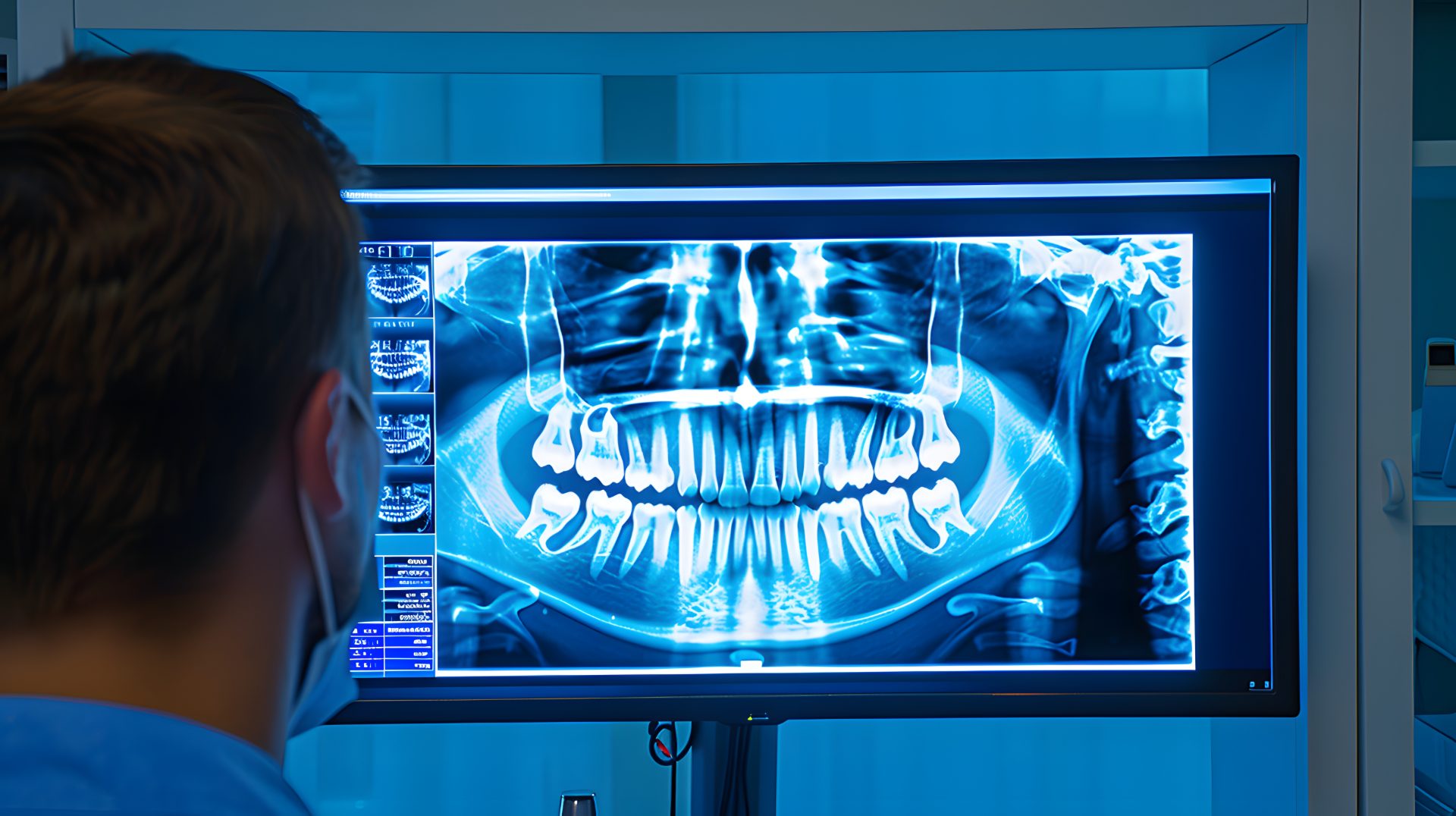
- A 3D scan shows which options fit you, and each comes priced in writing.
Whether you are missing one tooth or many, the plan starts with your scan. Book your free consult + 3D scan at our McLean (Tysons Corner) or Alexandria office: the examination, a 3D scan and your options in writing, each with its price. The consult and scan are free for new patients, as an ongoing offer; the scan is valued at $400. Bring your insurance card, and any scans or quotes you already have.
About the author
Dr. Esam Abou Nahlah, D.D.S., M.S., FACP, is a board-certified prosthodontist (Diplomate, American Board of Prosthodontics) with offices in McLean (Tysons Corner) and Alexandria, Virginia. He has practiced since 2003, has placed over 18,000 implants, and teaches prosthodontic residents as adjunct faculty at Virginia Commonwealth University.
Research References
- Jung RE, Zembic A, Pjetursson BE, Zwahlen M, Thoma DS. Systematic review of the survival rate and the incidence of biological, technical, and aesthetic complications of single crowns on implants reported in longitudinal studies with a mean follow-up of 5 years. Clinical Oral Implants Research. 2012;23(Suppl 6):2–21. https://pubmed.ncbi.nlm.nih.gov/23062124/
- Tarnow D, Elian N, Fletcher P, Froum S, Magner A, Cho SC, Salama M, Salama H, Garber DA. Vertical distance from the crest of bone to the height of the interproximal papilla between adjacent implants. Journal of Periodontology. 2003;74(12):1785–1788. https://pubmed.ncbi.nlm.nih.gov/14974820/
- Patzelt SBM, Bahat O, Reynolds MA, Strub JR. The All-on-Four treatment concept: a systematic review. Clinical Implant Dentistry and Related Research. 2014;16(6):836–855. https://pubmed.ncbi.nlm.nih.gov/23560986/
- Bidra AS, Agar JR. A classification system of patients for esthetic fixed implant-supported prostheses in the edentulous maxilla. Compendium of Continuing Education in Dentistry. 2010;31(5):366–374. https://pubmed.ncbi.nlm.nih.gov/20583505/
- Tan WL, Wong TLT, Wong MCM, Lang NP. A systematic review of post-extractional alveolar hard and soft tissue dimensional changes in humans. Clinical Oral Implants Research. 2012;23(Suppl 5):1–21. https://pubmed.ncbi.nlm.nih.gov/22211303/
- Pjetursson BE, Tan WC, Zwahlen M, Lang NP. A systematic review of the success of sinus floor elevation and survival of implants inserted in combination with sinus floor elevation. Journal of Clinical Periodontology. 2008;35(8 Suppl):216–240. https://pubmed.ncbi.nlm.nih.gov/18724852/
A consultation includes the 3D scan and a clear answer about what your case actually needs, before you commit to anything.
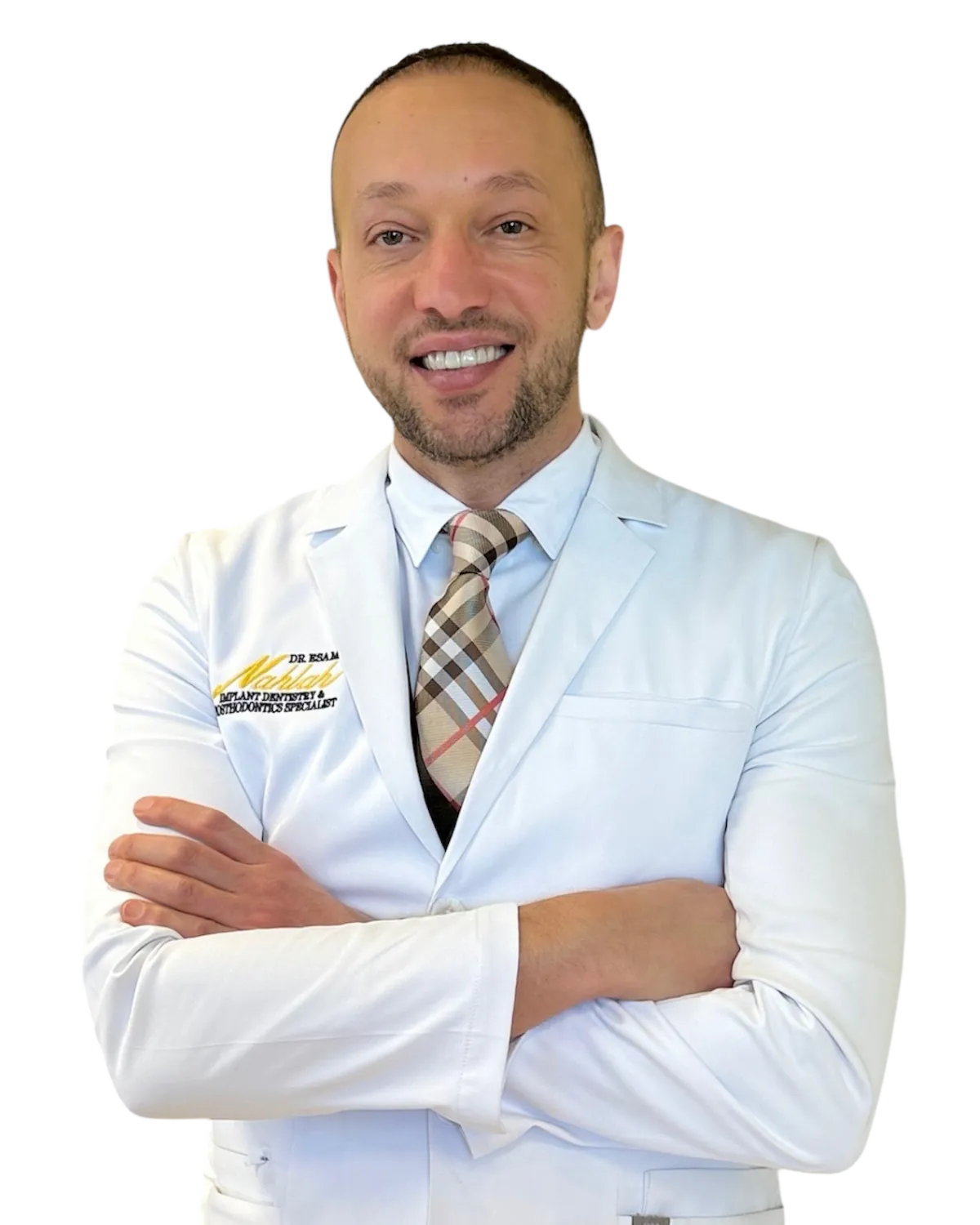
D.D.S., M.S. Diplomate of the American Board of Prosthodontics, practicing in Northern Virginia since 2013.
Meet the specialistService excellence and Stephanie is amazing! This place is very professional and caring. The consultation was really helpful. They took the time to explain everything well, making me feel comfortable and welcomed. Absolutely a great choice for dental needs.Tajala Battle · GoogleMore patient stories
A 3D scan and a clear answer about what your case actually needs, before you commit to anything.